
Shōnan-Shinjuku Line
Introducing
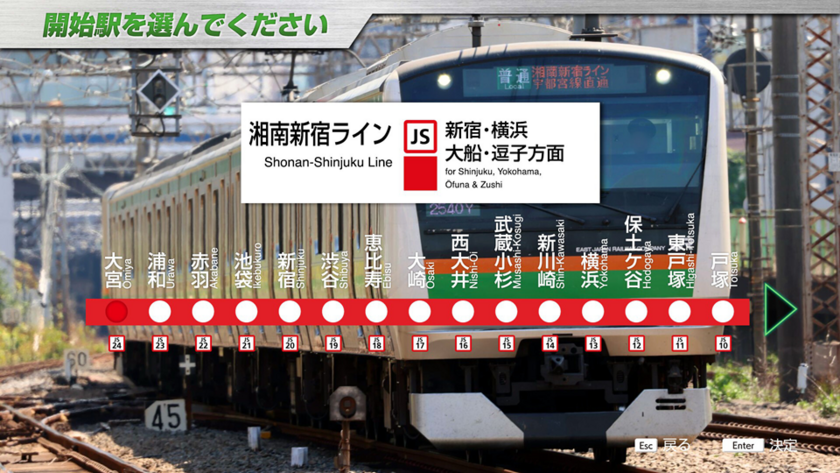
The Shōnan-Shinjuku Line is the nickname for the route connecting Ōmiya Station in Saitama City, Saitama Prefecture, and Ōfuna Station in Kamakura City, Kanagawa Prefecture, via Shinjuku Station. Service began with the December 1, 2001 timetable revision, operating as a route connecting stations like Utsunomiya Station in Tochigi Prefecture and Takasaki Station in Gunma Prefecture to stations in Kanagawa Prefecture such as Zushi Station, Odawara Station, and Atami Station,Via major stations in Saitama Prefecture such as Ōmiya Station and Urawa Station, as well as Tōkyō's sub-central business districts like Ikebukuro Station, Shinjuku Station, and Shibuya Station.
At its opening in 2001, the line used various train types including the 115 series, 211 series, 215 series, and E217 series. Currently, only the E231 series and E233 series are in operation.
The Shōnan-Shinjuku Line consists of two systems: one where the Yokosuka Line and Utsunomiya Line operate through services, and another where the Tōkaidō Line and Takasaki Line operate through services. The opening of the Shōnan-Shinjuku Line significantly improved convenience by enabling direct, transfer-free travel from northern Kantō areas like Tochigi and Gunma Prefectures through Tōkyō's sub-central business districts to the Yokohama, Kamakura, and Shōnan regions.
Previously, traveling from within Kanagawa Prefecture to Shibuya or Shinjuku Station required transfers at Shinagawa Station (to the Yamanote Line) or Tōkyō Station (to the Chūō Line). Direct service drastically reduced travel time, making it a vital commuter and student transportation option. Furthermore, it plays a key role in alleviating congestion on the Saikyō Line, which experiences particularly heavy crowding during morning and evening rush hours.
After departing Ōmiya Station, the train runs on the Tōhoku Freight Line for a while. It runs parallel to the Tōhoku Main Line and Keihin-Tōhoku Line, stopping only at major stations like Urawa Station and Akabane Station. Near Kami-Nakazato Station on the Keihin-Tōhoku Line, it departs from the Tōhoku Main Line and runs on the Yamanote Freight Line, running parallel to the Yamanote Line. It passes through stations particularly busy in the metropolitan area, such as Ikebukuro Station, Shinjuku Station, and Shibuya Station, heading for Ōsaki Station. Especially between Shinjuku Station and the Osaki Station area, it shares tracks with various trains, including the Narita Express limited express, Saikyō Line trains, direct Rinkai Line trains, direct Sotetsu Line trains, and freight trains. After leaving Ōsaki Station, it parts ways with the Yamanote Line, runs alongside the Tōkyō General Rolling Stock Center, and merges with the Yokosuka Line. After merging, it runs on the Yokosuka Line, heading toward Zushi Station or entering the Tōkaidō Line near Totsuka Station and proceeding toward Odawara Station (due to filming constraints, all trains in this DLC run on the Yokosuka Line tracks).
Enjoy the changing scenery from the bustling office districts and entertainment areas of Tōkyō's sub-central business districts to the commercial areas and commuter towns of Kanagawa Prefecture, along with various driving views such as running alongside Shinkansen, conventional lines, and other railway lines.
Key data
- Total length: 88,7 km
- Number of stations: 19
- Safety system: ATS-P
- Train model: E233-3000 series (15 cars) and E231
- Max speeds:
- Omiya ~ Sakuragicho : 90 km/h
- Sakuragicho ~ Ofuna : 95 km/h
- Routes:
- Omiya ~ Ōfuna (2831Y) : Rapid train - 16 stations - 80.3 km
- Omiya ~ Zushi (2531Y) : Local train - 19 stations - 88,7 km
- Omiya ~ Zushi (4521Y) : Local train - 19 stations - 88,7 km
- Omiya ~ Ōfuna (4823Y) : Special Rapid train - 16 stations - 80.3 km
- Omiya ~ Ōfuna (2831Y) : Rapid train - 16 stations - 80.3 km
- Automatic announcements: Yes
- Conductor announcements: Yes
- Driver announcement (pointing-and-calling): Yes
Stations list
| Station | Japanese name | Distance (km) | Local |
Rapid |
Special Rapid |
|---|---|---|---|---|---|
| Ōmiya | 大宮 | 0 | ● | ● | ● |
| Urawa | 浦和 | 6,1 | ● | ● | ● |
| Akabane | 赤羽 | 17,1 | ● | ● | ● |
| Ikebukuro | 池袋 | 22,3 | ● | ● | ● |
| Shinjuku | 新宿 | 27,1 |
● | ● | ● |
| Shibuya | 渋谷 | 30,5 | ● | ● | ● |
| Ebisu | 恵比寿 | 32,1 | ● | ● | | |
| Ōsaki | 大崎 | 35,7 | ● | ● | ● |
| Nishi-Ōi | 西大井 | 41,3 | ● | | | | |
| Musashi-Kosugi | 武蔵小杉 | 47,7 | ● | ● | ● |
| Shin-Kawasaki | 新川崎 | 50,4 | ● | | | | |
| Yokohama | 横浜 | 62,6 | ● | ● | ● |
| Hodogaya | 保土ヶ谷 | 65,6 | ● | | | | |
| Higashi-Totsuka | 東戸塚 | 70,5 | ● | | | | |
| Totsuka | 戸塚 | 74,7 | ● | ● | ● |
| Ōfuna | 大船 | 80,3 | ● | ● | ● |
| Kita-Kamakura | 北鎌倉 | 82,6 | ● | ||
| Kamakura | 鎌倉 | 84,8 | ● | ||
| Zushi | 逗子 | 88,7 | ● |
Movie
Useful links
Wikipedia: https://en.wikipedia.org/wiki/Sh%C5%8Dnan%E2%80%93Shinjuku_Line
Driver's guide and timetables: https://docs.google.com/spreadsheets/d/1eTeXIll7b9shAoTs7UCHG8nn-cHm4MD58ca4BLNfT2Y/edit?gid=654897296#gid=654897296