
Joban Line
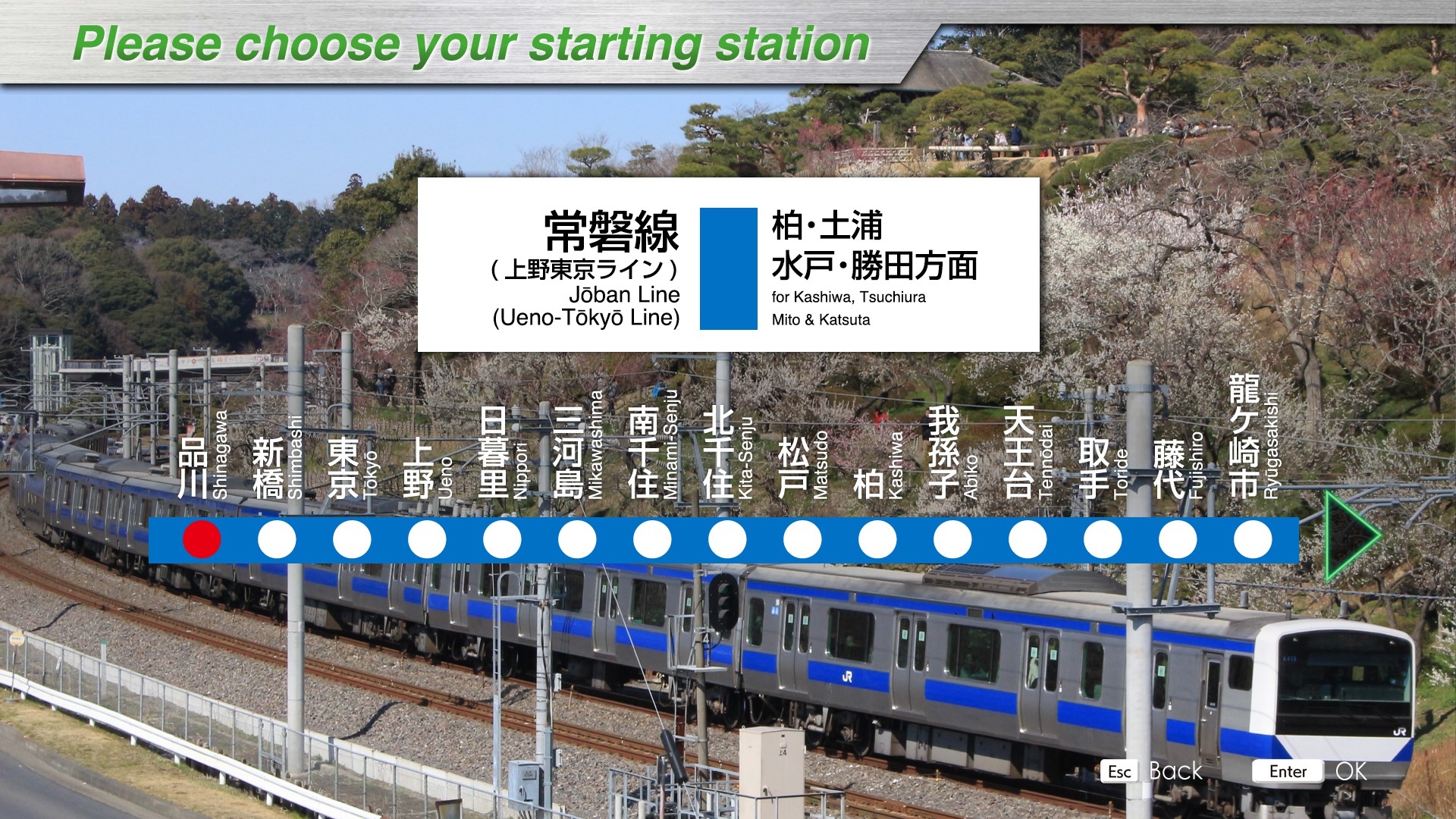
Introducing
The Joban Line runs from Ueno Station in Taito-ku, Tokyo, to Sendai Station in Sendai City, Miyagi Prefecture, via Chiba, Ibaraki, and Fukushima prefectures, and is the longest line among JR lines not named "Main Line. Until now, the Joban Line has operated to and from Ueno Station, but on March 14, 2015, the Ueno Tokyo Line began service, with some trains now running between Shinagawa and Ueno.
This DLC includes the Ueno Tokyo Line between Shinagawa Station and Ueno Station and the Joban Line between Ueno Station and Katsuta Station.
The line is characterized by the change of electrification system along the way, and there is a DC/AC switchover (dead section) between Toride and Fujishiro stations. (Shinagawa Station to Toride Station: 1500V DC, Fujishiro Station to Sendai Station: 20,000V AC)
Another major feature of this line is that it can operate at 130 km/h, the highest speed on a conventional JR line.
The first half of the line shows a significant change in scenery along the line from an office area in central Tokyo to a bed town. The second half of the line features the peaceful green landscape of Ibaraki Prefecture.
The long-distance route, which takes about two hours, allows passengers to enjoy driving while viewing the changing scenery along the route.
Key data
- Line Length: 133.7 km
- Number of stations: 29
- Safety system: ATS-P
- Train model: E531-0 series (10 cars)
- Max speed:
- Shinagawa ~ Nippori : 110 km/h
Nippori ~ Katsuta : 130 km/h (limite avec 🟩 : +10 km/h).
- Shinagawa ~ Nippori : 110 km/h
- Routes:
- Shinagawa ~ Katsuta (1177M) :
"Local"Local train - 29 stations - 133.7 km
- Shinagawa ~ Tsuchiura (1157M) :
"Local"Special Rapid train - 18 stations - 63.8 km
- Shinagawa ~ Katsuta (1177M) :
Driver announcement (pointing-and-calling) : No
Features
This line contains 6 dead sections, the first of which, between Toride and Fujishiro, involves a change of current (DC -> AC). Note that a voice warning is issued, as well as a flashing indicator at the top right of the right-hand screen, depending on the type of zone:
- DC -> AC changeover zone: "Mamonaku kōchoku section / 間もなく交直セクション" alert and "交直切換" indicator.
- Single neutral zone: "Mamonaku komogomo section / 間もなく交交セクション" alert and "交交" indicator.
ConsoleStations detaillist
Apart
Japanese name
Distance from
(km)
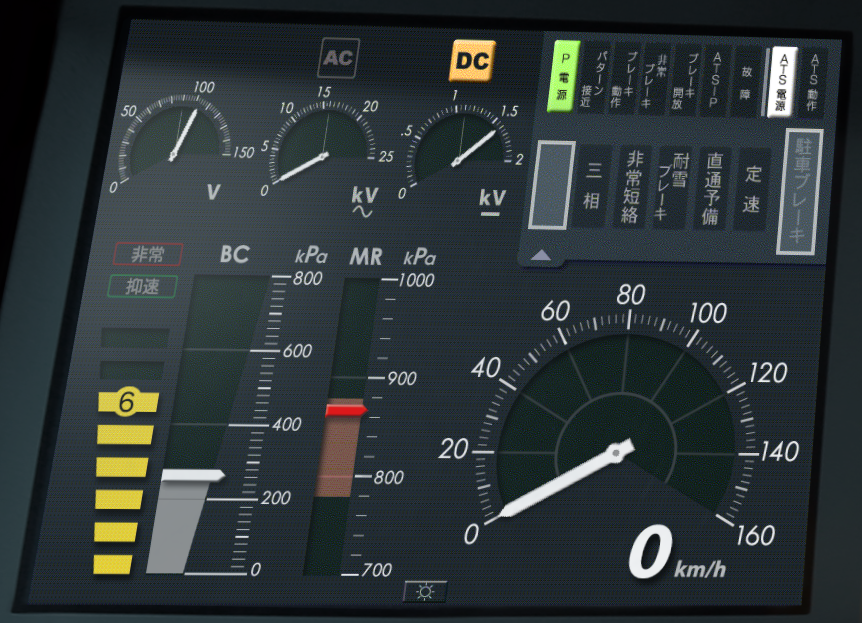
The first screen (train technical info) displays electrical voltages (including DC/AC indicator) and various indicators at the top.Yamanote
TheJK bottom area contains:Keihin-Tōhoku
JT
JO
JY Yamanote
東京 5,8
● ●
JY Yamanote
JC Chūō (非常)last andstop)
JO limit in greenSōbu (抑速)Rapid)
JU cylinder pressureUtsunomiya (BC)
JT reservoirTokaido
JE Keiyō (MR).last Notestop)
JO that if this falls below the red zoneYokosuka (780kPa),last thestop)
● ●
The top line of indicators are those forJY ATS-PYamanote. Here are the translations of the bottom line:
JK
Keihin-Tōhoku3-phasesJU (三相)Utsunomiya
JU
Takasaki Nippori 日暮里 0 ● ●EmergencyJY short-circuit (非常短絡)Yamanote
JK
Keihin-Tōhoku Mikawashima 三河島 1,2 ● | Minami-Senju 南千住 3,4 ● | Kita-Senju 北千住 5,2 ● ●Matsudo 松戸 15,7 ● ● Kashiwa 柏 26,9 ● ● Abiko 我孫子 31,3 ● | Tennōdai 天王台 34,0 ● |
Toride 取手 37,4 ● ● Fujishiro 藤代 43,4 ● ● Ryūgasakishi 龍ケ崎市 45,5 ● ● Ushiku 牛久 50,6 ● ● Hitachino-Ushiku ひたち野うしく 54,5 ● ● Arakawaoki 荒川沖 57,2 ● ● Tsuchiura 土浦 63,8 ● ● Kandatsu 神立 69,9 ● Takahama 高浜 76,4 ● Ishioka 石岡 80,0 ● Hatori 羽鳥 86,5 ● Iwama 岩間 91,9 ● Tomobe 友部 98,8 ● Uchihara 内原 103,5 ● Akatsuka 赤塚 109,3 ● Kairakuen 偕楽園 113,4 ● Mito 水戸 115,3 ● Katsuta 勝田 121,1 ●
Snow resistant brakes (耐雪ブレーキ)
Safety Brakes (直通予備)
Cruise control (定速)
Parking brakes (駐車ブレーキ)
Consult the MON/TIMS/INTEROS screen page for more details about the TIMS screen.
Movie
Useful links
Wikipedia : https://en.wikipedia.org/wiki/J%C5%8Dban_Line
Driver's guide:guide and timetables: https://docs.google.com/spreadsheets/d/1bmmf3sH66l5TGKOQmtigAochaUtXWKdScnRs0oIa6y8/edit#gid=422915208
Timetables (in japanese):